

Buying a flat in Adalaj takes six steps, and most of the risk sits in the first three. Those are choosing the project, working out the full cost with taxes, and checking the papers. Do all three before you pay any booking amount at all.
Our earlier guides cover why families choose Adalaj and how it compares with Zundal next door. This one covers the buying itself, from the first site visit to the day the deed is registered in your name.
Key Takeaways
- A builder cannot take more than 10% before a registered agreement for sale.
- On an under-construction flat, GST, stamp duty and registration add close to 11% to the price.
- An "Adalaj" project can sit in Gandhinagar or Ahmedabad district. Its RERA number shows which.
- Take possession within two months of the occupancy certificate.
What Does Buying a Flat in Adalaj Involve?
Six steps, spread across the time it takes to build. You choose the project, work out the full cost, and check the papers. Then you book and register the agreement, pay as the building rises, and finally take the keys. The first three steps happen before you hand over any large sum.
Most of the buyers we meet here are not buying their first home. They are moving up from a 2 BHK they have outgrown, so many have been through a purchase before. That experience helps, but the rules have moved on since many of those first flats were bought.
A central law called the Real Estate (Regulation and Development) Act, usually shortened to RERA, now sets the order in which you pay. It was passed in 2016, and its main rules have applied since 2017. It also sets what the builder must show you first. The chart below follows that order.
Which District Is Your Adalaj Flat Actually In?
Check this before anything else, because the address can mislead you. Adalaj town sits in Gandhinagar taluka, in Gandhinagar district. Projects sold as "Adalaj" can stand on land in either Gandhinagar or Ahmedabad district. The district decides which government land rates apply and which office registers your deed.
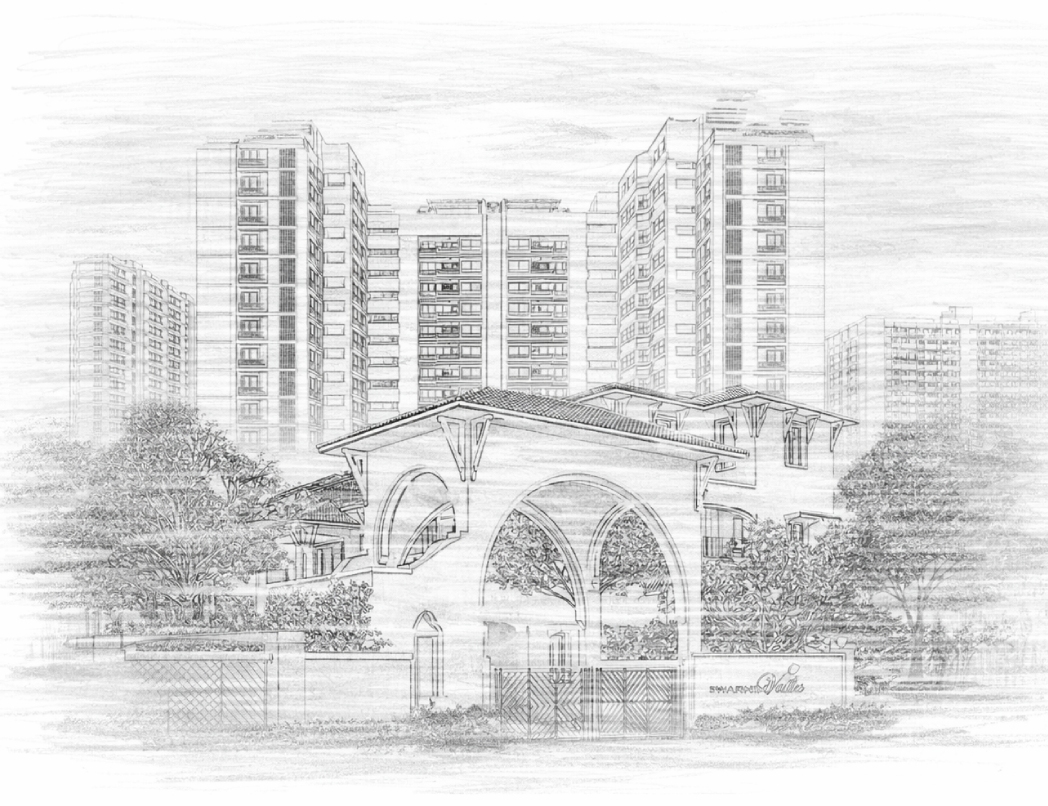
The RERA number shows it plainly, and our own two projects make a good example. Swarnim Skyline, on the Zundal-Adalaj road, is registered as PR/GJ/GANDHINAGAR/GANDHINAGAR/AUDA/MAA12510/211023. Swarnim Vatika, our villa project on the Adalaj side, is PR/GJ/AHMEDABAD/AHMEDABAD CITY/Others/RAA07219/210620. Both are Adalaj-area homes, and they are filed in two different districts.
The RERA number gives you the district on file. To confirm it for your exact plot, ask for the 7/12 extract. This is the state's record for a piece of land, so read the village and survey number on it. That survey number is what you type into the jantri portal to see the government's own value for the land.
Still deciding which side of the road suits you? Our Zundal and Adalaj comparison starts with the drive you make every weekday, which settles it for most families.
How Much Does a 3 BHK or 4 BHK in Adalaj Really Cost?
More than the number on the price list. On an under-construction flat, three government charges sit on top of it: GST, stamp duty and the registration fee. Together they add close to 11% to what you agreed with the builder. Buy a finished flat and pay for it in full after completion, and the GST part falls away.
GST is the largest of the three. The GST Council set an effective rate of 5% on homes under construction. Affordable homes pay 1% (GST Council, 2019). Outside the big metros, an affordable home means up to 90 square meters and up to ₹45 lakh. A 3 BHK or 4 BHK here will usually sit above that line, so plan for 5%.
A finished flat is treated differently. The completion certificate is the local authority's sign-off that the building is done. GST law leaves out a sale where "the entire consideration has been received after issuance of completion certificate" (CBIC, CGST Act). That saving is one reason some families wait for a ready flat, though they usually get less choice of floor and facing.
Stamp duty in Gujarat is 4.9% and the registration fee is 1%. Both are worked out on your agreed price or the government's jantri value, whichever is higher. Our stamp duty guide shows the sum line by line, with the official calculator.
Here is what that looks like on a round number. Say the agreed price of an under-construction flat is ₹80 lakh. GST at 5% adds ₹4 lakh, stamp duty at 4.9% adds ₹3.92 lakh, and the 1% registration fee adds ₹80,000. That is about ₹8.72 lakh on top of the price, before parking, the maintenance deposit or a lawyer. Your own figures depend on the jantri value and on how your builder sets out the documents.
So ask for a cost sheet that lists every charge, and get your loan sanctioned before you book. Banks lend only part of a home's value and usually leave the government charges for you to pay in cash. A sanction letter in hand tells you exactly how much the bank will lend you.
Check sizes with the same care. Before you set two quotes side by side, turn both into carpet area. That is the floor space inside your own walls, and RERA makes every builder state it.
Which Papers Should You Check Before You Book?
Four of them, all before you pay the booking amount. Read the RERA page, the land record, the sanctioned plan and the title. Each one answers a different question, and you can start on all four in the same week. If the builder cannot show you one of them, wait until they can.
- The RERA page. Search the project on GujRERA. Check the promoter's name, the approved plan and the latest quarterly update. Our guide to checking a RERA registration walks through the screens.
- The land record. That means the 7/12 extract and the NA (non-agricultural) order. Much of the land around Adalaj was farmland once. The NA order shows it was cleared for building, and the 7/12 shows who owns it.
- The sanctioned plan. This is the layout the planning authority approved. Hold it next to the flat you are being sold, floor by floor.
- The title. Ask a lawyer to trace who has owned the land. Your bank will also run its own legal check before it lends, which gives you a useful second opinion.
One detail trips people up. The name on the RERA page is the promoter, meaning the company that legally registered the project. It can differ from the brand on the hoarding. Many builders work this way. Just make sure the same name appears on the agreement and on every receipt you are given.
Buying a Flat in Adalaj, Step by Step
Here is the order that keeps your money safe, from the first visit to the final deed. Get each step right before you move on to the next. Jump ahead and you end up paying money before you hold the paper that protects it.
- Choose your side and your project. Go once on a Sunday with the family, then again on a weekday morning when the site is working. The weekday visit shows you the building, and the Sunday one mostly shows you the sample flat.
- Get the loan sanctioned and the cost sheet in writing. Do both before any booking. A sanction takes some days to come through, so start the paperwork while you are still visiting sites.
- Check the four papers above. If even one of them is missing, pause here until the builder can show it to you.
- Book, then register the agreement. The law is clear on this point. A promoter "shall not accept a sum more than ten per cent of the cost" without a registered agreement for sale (RERA Act, 2016). A booking receipt does not count as that agreement, however official it looks.
- Pay as the building rises, and keep visiting. Your agreement ties each payment to a stage of work. Look at the site before you pay each demand, using our under-construction checklist as your guide.
- Take possession, then get the deed registered. The occupancy certificate is the local authority's confirmation that the building is fit to live in. Once it is issued, the Act expects you to take possession within two months. List every defect before you sign for the keys. The promoter must then register a conveyance deed, the final document that transfers the flat to you.
What Happens After You Get the Keys?
Three duties move to you, and they are easy to forget. You pay your share of local taxes and utility bills. You help set up the residents' society. You also keep a dated list of defects. The law gives you five years to report them, and the builder thirty days to fix each one.
The Act spells out the bills. It says buyers pay their share of the "registration charges, municipal taxes, water and electricity charges, maintenance charges" and similar costs. It also says every buyer "shall participate towards the formation of an association or society" of residents.
Ask the builder one practical question early. Which local body will collect your property tax and supply water at this address? Write the answer down, because it tells you who to call when the water stops on a Monday morning.
Which Mistakes Cost Adalaj Buyers the Most?
Most of the costly ones happen before the agreement is signed, while you still feel you are only looking. Here are four that come up again and again. Each one is cheap to avoid if you know about it in time.
- Comparing rates on different areas. One quote uses super built-up area, which adds a share of lobbies and stairs, and the other uses carpet area. The cheaper rate per square foot then turns out to be the dearer flat. Our guide to carpet area and built-up area shows how to convert one into the other.
- Paying more than 10% on a receipt. The law says the builder should not ask for that much before the agreement is registered. If someone does, treat it as a warning and stop.
- Trusting the brochure address. As our two RERA numbers above show, homes sold under the Adalaj name can be filed in different districts.
- Assuming the metro reaches Adalaj. The metro now runs from Ahmedabad to Gandhinagar, but it has no station in Adalaj. The nearest is at Koba, roughly 6 km away, so plan the last leg by road.
The Short Version
Buying a flat in Adalaj goes best when you take it in order. Work out the full cost with every tax added. Check the district and the papers. Then book with 10% or less, and get the agreement registered before you pay more.
If you do one thing this week, ask for two documents on your next site visit: the RERA number and the 7/12 extract. Those two answer most of the early questions.
We build in Adalaj and Zundal, and we are happy to walk either site with you. Talk to our team to set up a visit.
Frequently Asked Questions
It depends on the land. Adalaj town is in Gandhinagar district, but some projects sold under the Adalaj name sit in Ahmedabad district. The district is written into the project's RERA number, and the 7/12 extract confirms it.
No more than 10% of the cost. Above that, the RERA Act requires a written agreement for sale, registered first.
Not if you pay the full price after the completion certificate is issued. GST law leaves out such a sale. On a flat bought under construction, plan for 5%. That is the effective rate the GST Council set for homes above the affordable limit.
For an under-construction flat, GST at 5%, stamp duty at 4.9% and a 1% registration fee, so close to 11% in all. Then add parking, the maintenance deposit and legal fees, which vary by project. Ask for every one of them on a written cost sheet before you book.
Walk the flat again with your defect list and send it to the builder in writing, with dated photographs. Then find out who collects property tax at your address and join the residents' society as it forms.