

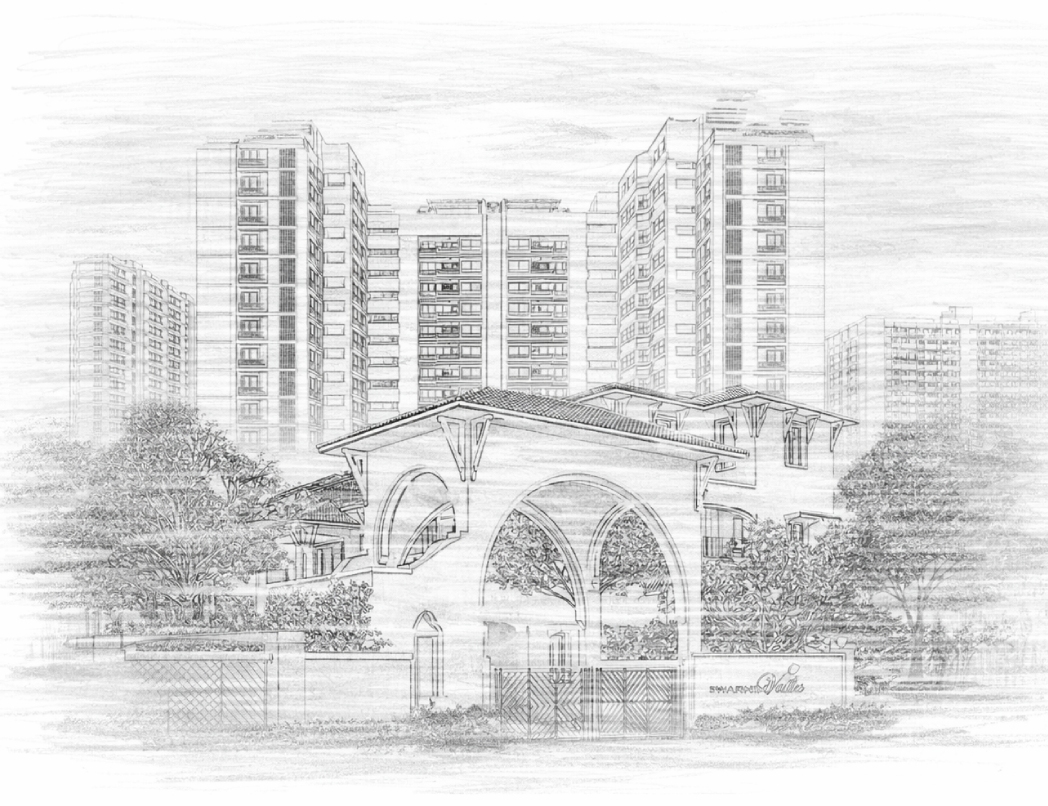
Walk through a gated villa scheme in Adalaj on a Sunday morning and it is easy to fall for the garden and the quiet lanes. Most families looking at villas in Adalaj are moving up from a 2 BHK flat. If that is you, a home with its own gate is a big step, and it deserves a careful look at what you are buying.
Here is the short version. In a gated scheme you usually buy a marked plot and the villa on it. The roads, gate, garden and clubhouse belong to all the owners together. So check three things before you book: how much land is yours, who runs the shared parts, and which papers prove it all. This guide covers each one in the order you will meet them.
Key Takeaways
- A gated villa usually means your own plot plus a share in roads, gate and garden.
- Ask for the plot area, built-up area and carpet area in writing.
- Under the RERA Act, the builder needs written consent from at least two-thirds of buyers to change the layout.
- Gujarat adds 4.9% stamp duty and a 1% registration fee.
What Do You Buy With a Villa in Adalaj?
You buy two things at once. The first is your own villa on a marked plot of land. The second is a share in everything the residents use together, such as the internal roads, the entrance gate, the garden and the clubhouse. Both should be written into your papers.
The law treats a villa much like a flat. The RERA Act, 2016 counts a home "on a plot of land" as an apartment. That means most villa schemes must be registered, just like a tower. Only small projects can skip it, such as those with eight homes or fewer. The same Act lists the shared parts, called common areas. They include "parks, play areas, open parking areas", water tanks, motors and the other services everyone uses.
The shared part is easy to forget on a site visit. You will spend most of your time inside the show villa. The roads, the shared garden and the scheme's outer wall are part of what you pay for too. You will share their upkeep for as long as you live there.
Why Are There So Many Villas in Adalaj?
Adalaj still has room to spread out. It sits just north of Ahmedabad on the road to Gandhinagar, and much of the land around it was farmland once. Larger plots make low-rise homes possible, so you see more villas here than in the built-up parts of the city.
The town is best known for the Adalaj Stepwell, the old carved well that still draws visitors on a Sunday. Families also like the calmer roads and the short drive to Gandhinagar.
We build here too. Swarnim Vatika is a scheme of 42 homes behind the Adalaj Stepwell. Its 4 BHK villas have a layout size of 4,518 sq ft. Its project page puts Infocity 6.1 km away and Delhi Public School 4.4 km away. Its GujRERA page shows that about 60% of the project's 9,656 sq m of land is open area. That figure is worth checking for any scheme you visit. Our Flats in Adalaj page shows Vatika next to our flats at Swarnim Skyline.
How Much Land Comes With Your Villa?
Ask for three numbers and compare every scheme on the same three. The plot area is the land marked as yours. The built-up area is the floor space of the house, including its walls. The carpet area is the space inside the walls that you can actually use. Builders do not all quote the same one.
| Size | What it measures | Where to find it |
|---|---|---|
| Plot area | The land marked as yours | The layout plan and your agreement |
| Built-up area | The house, including its walls | The approved building plan |
| Carpet area | Usable floor space inside the walls | The RERA page and your agreement |
The RERA Act gives carpet area a fixed meaning: "the net usable floor area" of the home. It leaves out the outer walls, service shafts, your own balconies and open terraces.
A brochure may quote any one of these, so ask which one a figure measures. Our guide to carpet area, built-up and super built-up explains how each one is measured. For a villa, the plot area matters most over the long run. Land is the part of your home that does not age, and it decides how much garden, parking and future space you really have.
Then find your own plot on the approved layout plan, and ask for a printed copy you can study at home. The plot number on the plan should match the plot number in your agreement. If the plan shows a road or a garden next to your plot, that space is shared. It stays shared even if it feels like part of your front yard.
Who Looks After the Roads, Gate and Garden?
At first the builder does, and later the residents' society takes over. The RERA Act calls the builder the promoter. It makes the builder provide and maintain the essential services until the association of owners takes over maintenance. The builder must also help the owners form that association, society or co-operative society.
That handover follows a clear order:
The last step is the one to understand. Under the Act, the builder must register a conveyance deed for your home. The shared land goes with it, as "undivided proportionate title in the common areas to the association of the allottees". In plain words, your villa comes to you, and the shared land and services go to the society you belong to.
The Act also protects the layout you bought into. To change the layout or common areas, the builder needs "the previous written consent of at least two-thirds of the allottees". So the garden on the approved layout plan cannot quietly turn into three more plots.
What Does Villa Upkeep Look Like After You Move In?
Upkeep splits into two lists. The society pays for the shared parts through a monthly maintenance charge. You pay for everything inside your own boundary wall. Families moving from a flat are often surprised by the second list, because in a flat, the society handled most of these jobs.
| The society pays for | You pay for |
|---|---|
| The gate, security guards and CCTV | Terrace waterproofing, before every monsoon |
| Internal roads, street lights and drains | Your plot's own garden, gate and compound wall |
| The garden, play area and clubhouse | Paint, plumbing and wiring inside the villa |
| Shared water tanks and pumps | Any tank or pump that serves only your home |
Ask the builder for the maintenance charge and the deposit in writing, along with a list of what the charge pays for. Ask how the charge is worked out too. Some societies charge every home the same amount, and others charge by plot size. Our guide to villa vs apartment living explains how this compares with life in a flat.
Which Papers Should You Check for a Villa?
Start with the papers every home needs, then add three that matter more for a villa. The basic set is the RERA page, the land record, the title and the approved building plan. Our step-by-step guide to buying in Adalaj explains each of them, including the 7/12 extract and the NA order.
For a villa, look harder at these:
- The approved layout plan. This is the plan of the whole scheme, and it shows every plot, road and garden. Check which authority passed it. Swarnim Vatika's GujRERA page names the Gandhinagar Urban Development Authority, for example.
- Your plot number and plot area in the agreement. Both should match the layout plan exactly, down to the decimal.
- The society's draft rules. These say what you may build later, such as an extra room or a terrace shed. Ask for them before you book, because building anything new on a villa usually needs the planning authority's permission too.
You can look up any project on the Gujarat RERA website by name or number. Swarnim Vatika's number is PR/GJ/AHMEDABAD/AHMEDABAD CITY/Others/RAA07219/210620. Search for it on the site, and the page shows the land area, the open area and the authority that passed the plan.
What Does a Villa in Adalaj Cost on Top of the Price?
Plan for about 5.9% more in government charges, plus a few smaller costs. Gujarat charges stamp duty of 4.9% of the market value. That is your price, or the government's jantri value if that is higher. The registration fee is 1% of the price you pay, and both are paid when you register the sale.
The state sets its own value for land through jantri rates, and for a villa that value covers the land as well as the house. You can check the land rate for a survey number on the jantri portal. The next figure is made up for this guide and does not come from any Swarnim home. Say a villa's price and its market value are both ₹1,85,00,000. The two charges then come to about ₹10,91,500.
Then add the rest: loan fees, GST if the villa is still being built, the maintenance deposit and a lawyer's fee.
A Site Visit Checklist for Villas in Adalaj
A villa visit needs more time outside than a flat visit, so plan for at least an hour. Go once on a weekday evening and again on a Sunday morning, when you will see the traffic, the light and the neighbors. Take this list with you.
- Walk the boundary of your plot. Ask the site team to show you its corners, and compare what you see with the layout plan.
- Picture the monsoon. Look at where rainwater would run from your plot, and whether the internal road sits higher or lower than your gate.
- Check which way the villa faces. Morning light on the living room and shade on the bedrooms make a real difference in Ahmedabad's hot summer months.
- Ask where the water comes from, how the tanks are filled, and who pays to run the pumps.
- Stand on the terrace. Look at the waterproofing, the slope towards the drains and the view of your neighbors.
- Drive out at school drop-off time and check how long the trip takes to your children's school and your office.
- If families already live in the scheme, talk to one of them and ask how the society handles repairs.
Where to Start
Remember one thing: with a villa you buy land as well as a house, so the papers for that land matter most. On your next site visit, ask for the layout plan and find your plot on it. Then check that the plot number matches the one in your agreement.
If you would like to walk through a villa in Adalaj, talk to our team. We will show you Swarnim Vatika on a day that suits your family. If you would rather look at a flat, Swarnim Skyline is close by on the Zundal-Adalaj road.
Frequently Asked Questions
Usually you own your marked plot, and the society holds the shared land such as roads and gardens. Check that your agreement names your plot number and plot area, and that both match the approved layout plan.
The builder maintains them until the residents' society takes over. When the project is handed over, the RERA Act requires the builder to pass the common areas to the society. After that, the monthly maintenance charge pays for upkeep.
Sometimes. It depends on the approved plan, the planning authority's rules and your society's rules. Ask for the society's draft rules before you book, and get any new building work approved first.
Yes. Its GujRERA number is PR/GJ/AHMEDABAD/AHMEDABAD CITY/Others/RAA07219/210620, and you can check it on the Gujarat RERA website. GujRERA lists 42 homes in the project, and our project page shows 4 BHK villas.
Gujarat charges 4.9% stamp duty on the market value and a 1% registration fee on the price you pay. Add loan fees, any GST, the maintenance deposit and legal fees.